- Page 1: Get your water tested.
- Page 2: When do you change your water filters.
- Page 3: Flush your domestic RO membrane.
- Page 4: How often do you need to replace your reverse osmosis membrane.
- Page 5: How to Start a Profitable Water Shop.
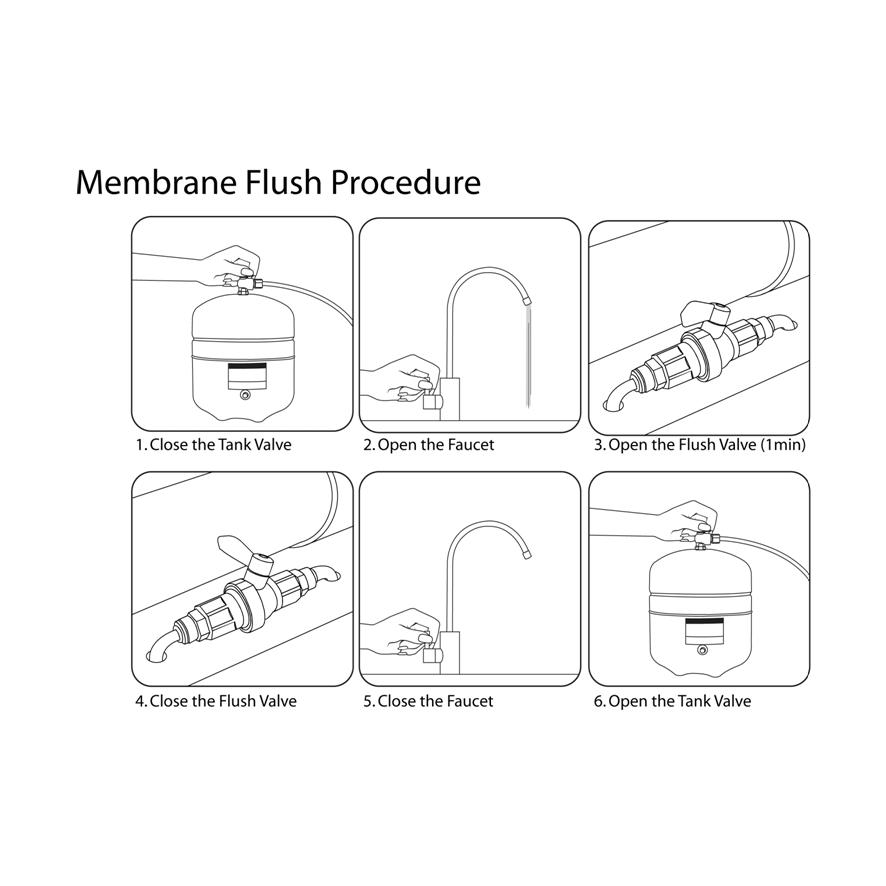
Flush your domestic reverse osmosis membrane.
To flush a domestic Reverse Osmosis (RO) membrane, you allow water to flow across the membrane at a higher rate to wash away trapped salts, dirt, and contaminants. This helps extend membrane life and maintain good water quality.
Basic RO Membrane Flushing Process:
- 1. Open the Flush Valve
Most domestic RO systems have:
A manual flush valve, or an automatic flush valve.
The flush valve is normally located on the membrane housing waste line. - 2. Let Water Run to Drain
Open the flush valve fully and allow water to run to the drain for: - – 2–5 minutes for normal flushing,
- – Up to 10 minutes if the system has been unused for a long period.
- During flushing:
- Water flow to drain increases.
- Pressure across the membrane reduces.
- Contaminants are washed away.
- 3. Close the Flush Valve.