
A ball valve is s quarter-turn rotary valve that uses a hollow, perforated and pivoting ball to control the flow of liquid or gas. When the handle is turned 90 degrees, the valve either opens or closes completely. This design allows for quick shut-off, tight sealing, and a long service life. Ball valves are widely used in residential, commercial, and industrial applications.
How a ball valve works
A ball valve operates on a simple principle using a few key components:
- Body: The outer shell houses all the internal parts of the valve.
- Ball: A spherical component with a hole, or bore, through its center.
- Stem: The stem connects the ball to the handle or actuator.
- Seats: Two soft or metal rings that support the ball and provide a seal to prevent leaks.
To operate the valve, the handle is turned, which rotates the stem and ball:
- Open: When the ball’s bore is aligned with the pipeline, the fluid can flow freely. The handle is parallel to the pipe.
- Closed: A 90-degree turn of the handle rotates the ball so its solid side blocks the flow. The handle is perpendicular to the pipe.
-
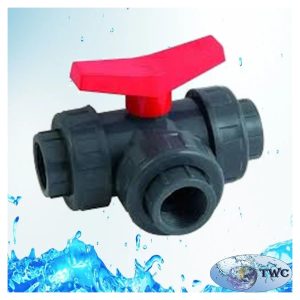
3 Way Ball Valves Solvent Cement (6)
-
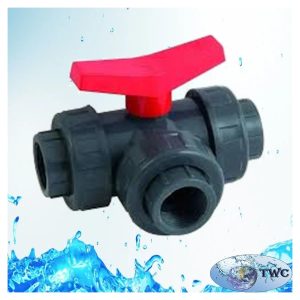
3 Way Ball Valves Threaded (6)
-
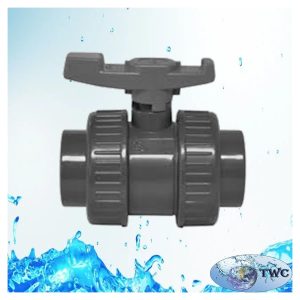
Double Union Ball Valve Solvent Cement (6)
-
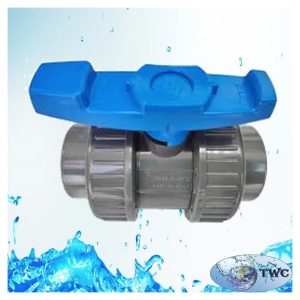
Double Union Ball Valve Solvent Cement For Water And Light Chemicals (10)
-
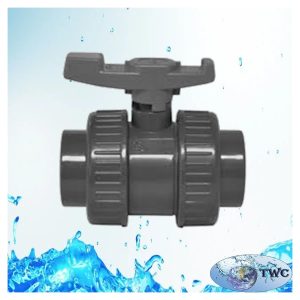
Double Union Ball Valve Threaded (6)
-
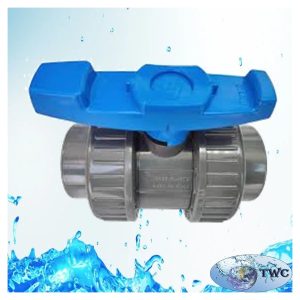
Double Union Ball Valve Threaded For Water And Light Chemicals (10)
-
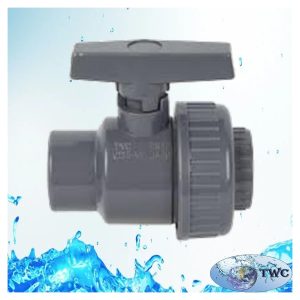
Single Union Ball Valves Solvent Cement (6)
-
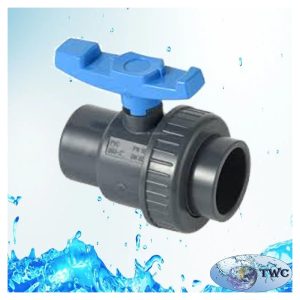
Single Union Ball Valves Solvent Cement For Water And Light Chemicals (10)
-

Single Union Ball Valves Threaded (6)
-

Single Union Ball Valves Threaded For Water And Light Chemicals (10)
-

Compact Ball Valve Solvent Cement (10)
-
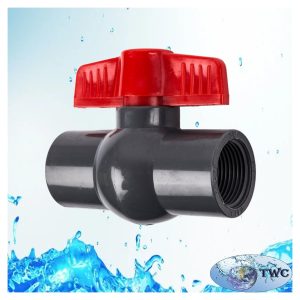
Compact Ball Valve Threaded (10)