Description
Please Note:
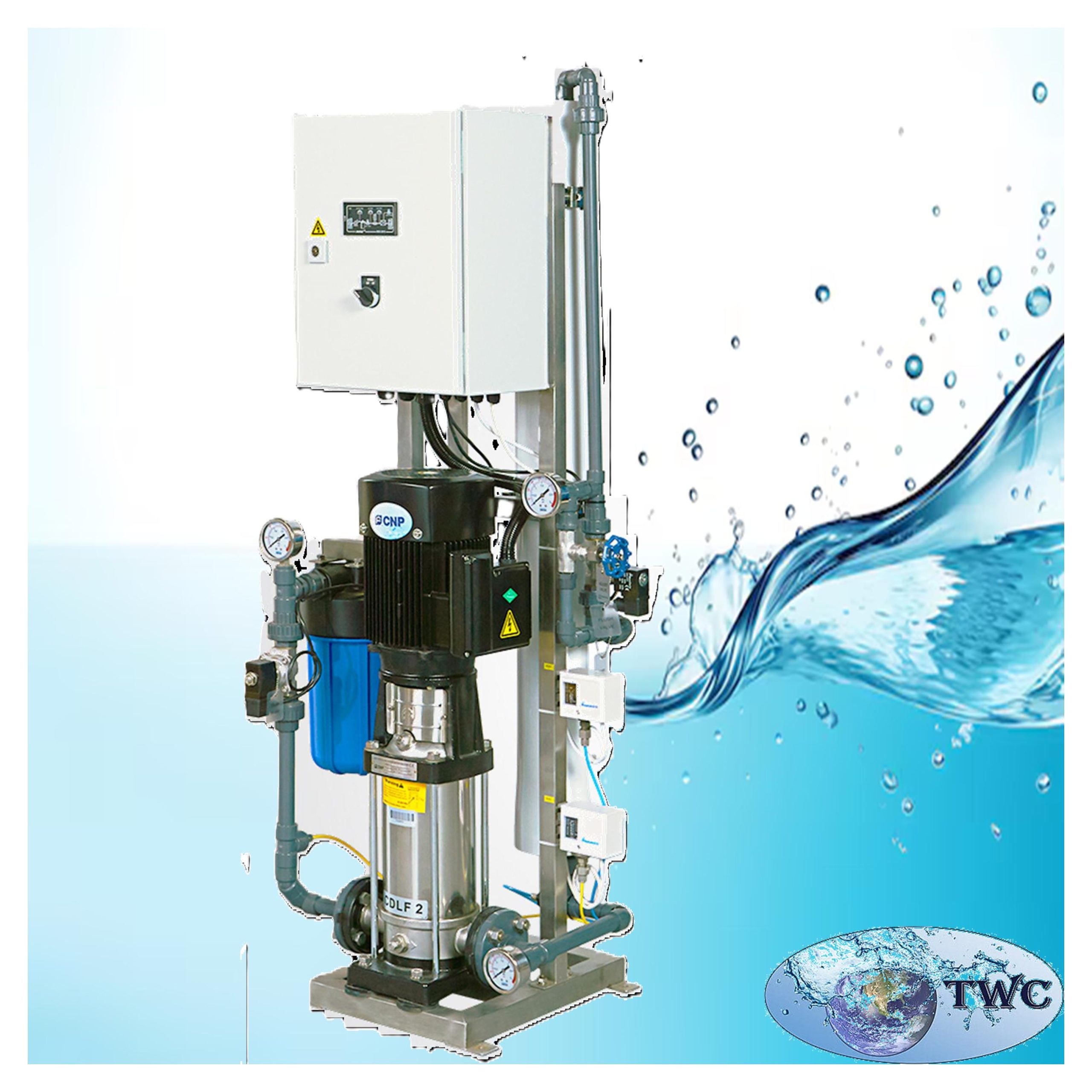
When you consider purchasing this 250 LPH RO System , you need to know the following information as it is very important.
This system requires a pretreatment setup for it to perform to its maximum capacity.
Below, the sketch shows
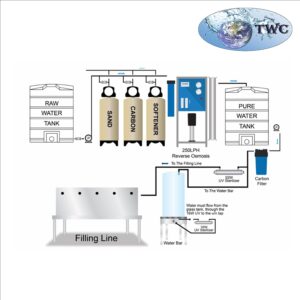
a basic pretreatment setup with the reverse osmosis system.
Customers can access these Models with permeate output of 250 liters/hr as shown in the specifications.
The widely used are reverse osmosis systems for commercial purposes. Such as treatment of wastewater, desalination, minerals reclamation, and purification of water. If you have been searching for the best and most efficient Industrial RO system. Then you have landed at the right place. At TWC, we provide the best quality RO water units that can meet your needs, expectations, and budget.
We provide the highest standard and compact commercial reverse osmosis system at an affordable pricing range. All our RO systems are highly durable. We guarantee that they can be last for many years with proper care and maintenance.
TDS stands for Total Dissolved Solids, representing the total concentration of inorganic salts (calcium, magnesium, potassium) and organic matter dissolved in water, measured in parts per million (ppm). It is crucial for assessing water quality, taste, and safety, with ideal drinking water usually falling between \(50–500 ppm).
Why You Should Care About TDS
- Water Quality and Taste: High TDS levels (>500 ppm) often cause water to taste metallic, salty, or bitter, and can lead to excessive scale buildup in kettles and pipes.
- Health Implications: While not always harmful (many minerals are beneficial), excessive TDS (>1000 ppm) may indicate high levels of undesirable ions, such as lead or nitrates, making it unsafe.
- Filter Maintenance: Measuring TDS helps determine when water filtration systems (such as reverse osmosis) need new filters, as efficiency drops as the filter wears out.
250 LPH RO system – 1 x 4040 membrane (For high TDS levels)