
Pressure gauges and water pressure measurement instruments:
Monitor and measure system pressure accurately with pressure gauges from The Water Company. Suitable for a variety of water supply, pumping, filtration and water treatment applications, our pressure gauges help operators monitor operating conditions and identify potential pressure changes within a system.
Whether you are maintaining a domestic water supply, installing a pump or working with commercial and industrial water treatment equipment, choosing the correct pressure gauge is important for effective system monitoring.
Pressure gauges for different applications:
Our range includes pressure gauges with different pressure ranges and mounting configurations to suit a variety of installation requirements.
Available products include:
0–7 bar pressure gauges – suitable for monitoring pressure in compatible low-pressure water systems.
0–10 bar pressure gauges – useful for monitoring pressure in many domestic and general water supply applications.
0–17 bar pressure gauges – designed for compatible systems requiring a higher pressure measurement range.
0–25 bar pressure gauges – suitable for compatible higher-pressure applications.
Bottom-mount pressure gauges – designed for installations where the connection enters from the bottom of the gauge.
Panel-mount pressure gauges – suitable for installations where the gauge is fitted through a panel or control cabinet, subject to the mounting design.
Where Can Pressure Gauges Be Used?
Water pumps and booster pump systems.
Water filtration and purification plants.
Reverse osmosis systems and water treatment equipment.
Water pressure systems and plumbing installations.
Borehole water supply systems.
Irrigation systems.
Commercial and industrial water installations.
Why is pressure monitoring important?
Monitoring pressure helps you assess whether a system is operating within its intended pressure range. Unexpected pressure changes may indicate a restriction, a blockage, a leak or a change in operating conditions. Regular checks can assist with troubleshooting and routine maintenance.
When selecting a pressure gauge, consider the maximum operating pressure, required measurement range, connection size and mounting configuration. Always choose a gauge that is compatible with your equipment and operating conditions.
Showing all 8 results
-
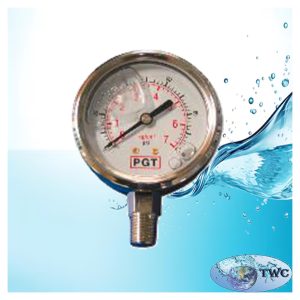
0-10 Bar bottom mount pressure gauge
R145.38 Add to cart -

0-10 Bar panel mount pressure gauge
R145.38 Add to cart -

0-17 Bar bottom mount pressure gauge
R145.38 Add to cart -

0-17 Bar panel mount pressure gauge
R145.38 Add to cart -

0-25 Bar bottom mount pressure gauge
R145.38 Add to cart -

0-25 Bar panel mount pressure gauge
R145.38 Add to cart -

0-7 bar bottom mount pressure gauge
R145.38 Add to cart -

0-7 Bar panel mount pressure gauge
R145.38 Add to cart