Description
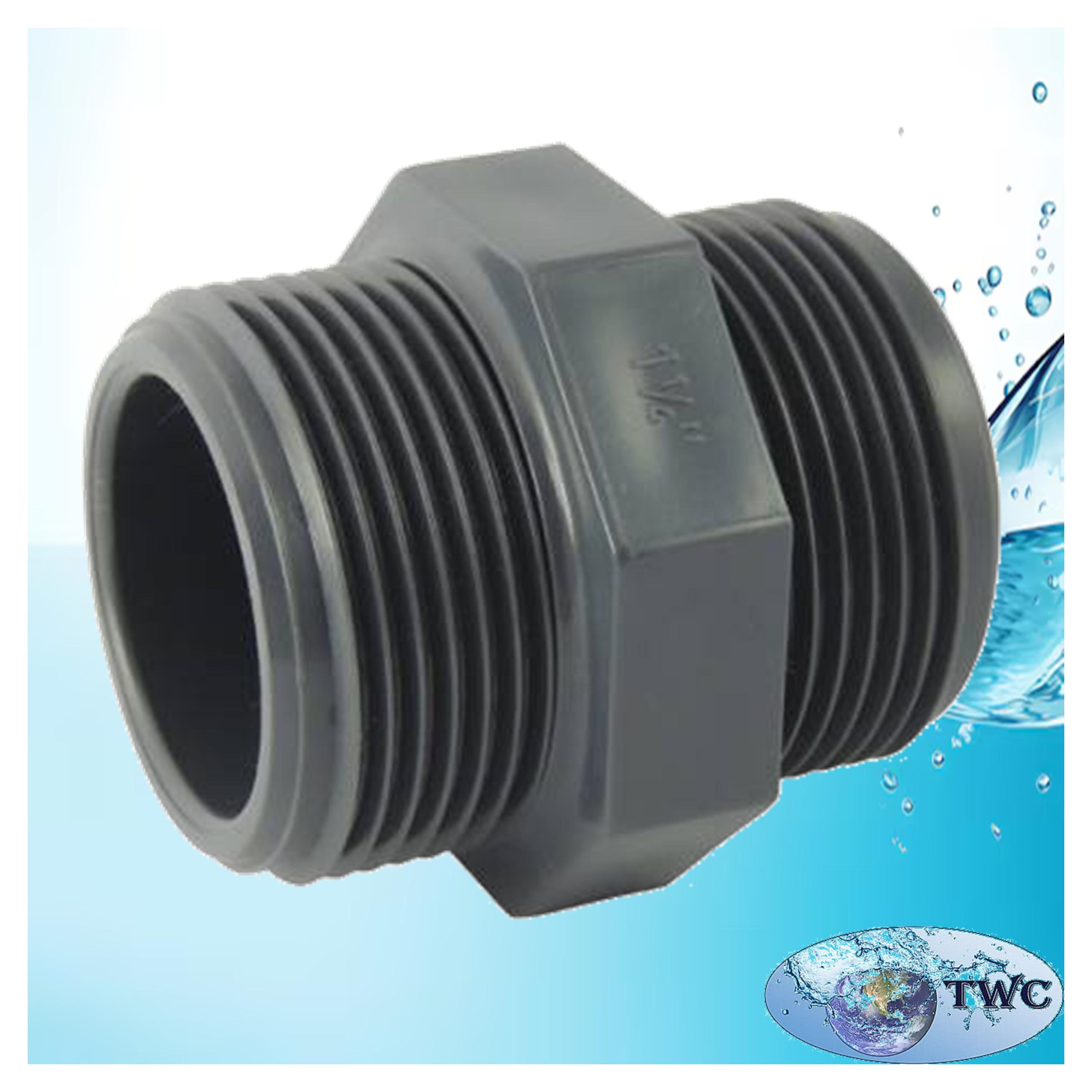
A PVC Nipple male thread 3/8″ is a short pipe with male threads on both ends, used to connect two female-threaded pipes or fittings. They are a common component in plumbing systems for creating secure, corrosion-resistant connections, especially in low-pressure applications.
Types of PVC nipples
- Barrel nipple: The most common type, with male threads at both ends for general-purpose connections.
- Close nipple: Threads extend along nearly the entire length of the pipe, allowing for the shortest possible connection between two fittings.
- Reducing nipple: Connects fittings of two different sizes, featuring male threads of different diameters on each end. For example, a 1-inch to 3/4-inch reducing nipple.
- Cut-off nipple: Designed with grooves, allowing for easy cutting to a custom length. These are often used for irrigation risers.
- TOE (threaded one end) nipple: A pipe threaded at one end only, often used for specific installations such as tank legs.
- Hex nipple: Has a hexagonal section in the middle, allowing for tightening with a wrench.
Common schedules
PVC Nipple male thread 3/8″ being common for household plumbing. The nipple’s schedule refers to the pipe’s wall thickness and pressure rating. The two most common schedules for PVC are:
- Schedule 40: Has a standard wall thickness and is suitable for most drainage and low-pressure applications.
- Schedule 80: Features a heavier, thicker wall for use in higher-pressure systems.
- Installation guide
- Follow these steps to install a threaded PVC nipple for a leak-proof connection:
- Prepare the threads. Clean the male threads of the nipple and the female threads of the fitting with a wire brush.
- Apply sealant. Wrap 4–5 rotations of Teflon tape (thread-sealant tape) clockwise around the nipple’s threads. For extra security, apply a thread sealant paste designed for use with plastics.
- Join the pieces. Hand-tighten the nipple into the female fitting until it is snug.
- Tighten with a wrench. Use a wrench to make one to two additional turns.
- Avoid over tightening. Be careful not to over tighten, as this can crack the plastic fitting and cause a leak.
Shopping considerations
- Match schedules: Never combine schedule 40 fittings with schedule 80, even if the size is the same. The different wall thicknesses can cause a mismatch in the threads, leading to leaks.
- Match applications: Use standard PVC fittings for water up to 140°F (60°C). For higher temperatures, use CPVC nipples.
- Look for certification: For potable (drinking) water applications, ensure the fittings are certified for safety (e.g., NSF/ANSI 61 certified).
Nipple male thread 3/8″